Wheels Water Service drills high-capacity irrigation wells for agricultural properties in Long Prairie, MN. The work centers on the flat grain acres of Todd County, where corn and soybean rotations depend on reliable center-pivot water supply.
The ground under Long Prairie is mostly glacial outwash—sand and gravel left by retreating ice sheets. That geology sets the rules for how much water a well can produce and how it must be constructed. A household well and an irrigation well are different machines; the math for a 160-acre pivot starts with gallons per minute, not with a standard residential fixture count.
High-Volume Flatland Grain: Meeting Long Prairie’s Irrigation Demands
Wheels Water Service drills field irrigation wells specifically for Long Prairie’s farming operations. The company is based in Melrose and works across Central Minnesota, including the row-crop land around Todd County. For a landowner planning a new pivot, the first step is confirming that a local crew knows the local substrate. That familiarity matters because the aquifer does not behave the same from one township to the next.
Long Prairie sits in Todd County on terrain that was shaped by glacial activity. The city lies within the Long Prairie River watershed, a detail that bears on well placement near surface water. The surrounding township land is flat former prairie, well suited to center-pivot irrigation for corn and soybeans. Those two facts are not promotional—they directly affect setback reviews and the case for dedicated high-capacity wells.
The glacial outwash plain beneath the area consists of layered sand and gravel deposited by meltwater. In outwash, a well can often reach high specific capacity: more gallons per minute per foot of drawdown than a well sunk into till. But the outwash thickness varies. A drill rig may pass through a thin soil horizon, a zone of mixed glacial till, then hit saturated gravel. The yield depends on the screen length set in that gravel and the aquifer’s recharge from precipitation and upstream flow.
Residential wells in the region are commonly sized for 5 to 15 gallons per minute. A center-pivot system on corn ground needs a sustained multiple of that. The difference is not a matter of preference; it is the physics of evapotranspiration. Corn in mid-summer on a hot flat field can demand over 0.25 inches of water per day across the circle. On a 160-acre pivot, that is a large volume of water that must be delivered through the pipeline at the right pressure. The well must supply it without the water level dropping out of reach of the pump.
The crew’s experience in Todd County means the drilling plan starts with local soil maps and known aquifer windows. Glacial outwash here is not uniform; some pockets are fine sand that clogs screens, others are coarse gravel that produces freely. Matching the well to the mapped unit reduces the risk of a low-yield hole.
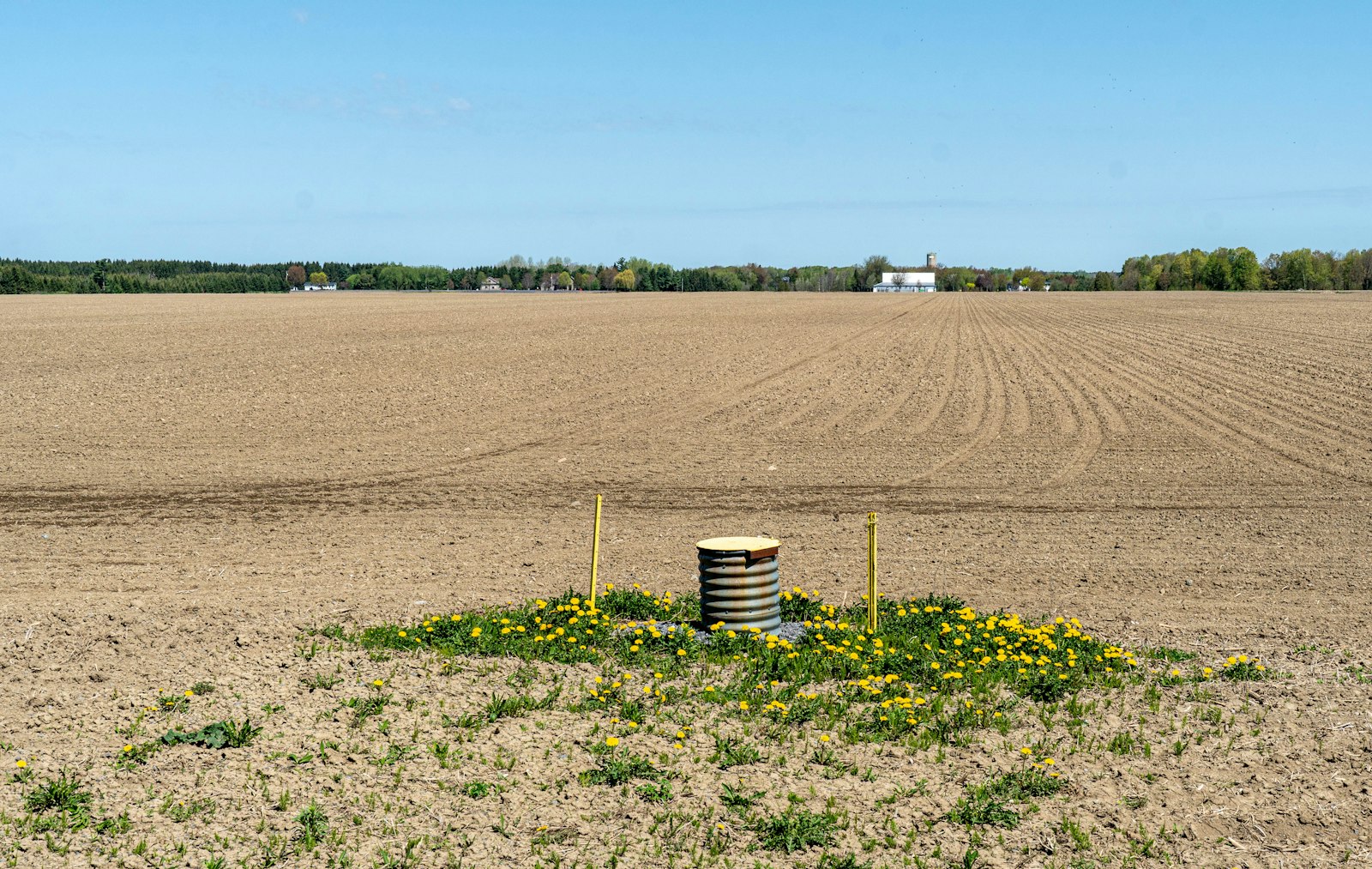
Sizing the Well: GPM Math for Center-Pivot Systems
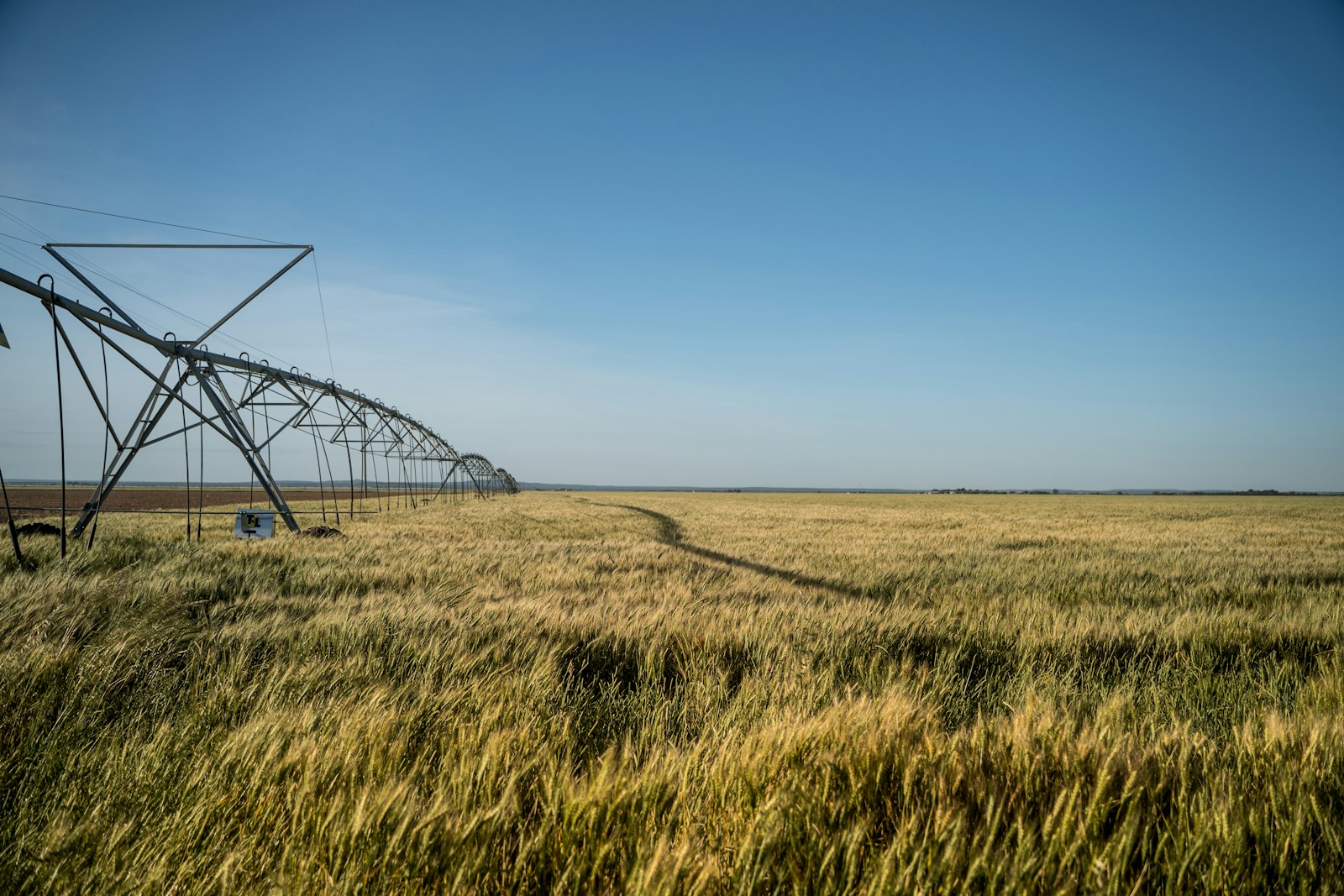
Center-pivot sizing begins with acreage and crop water need. A pivot covers a circular area; the radius defines the acres. The system sprays water through nozzles mounted along the span. Each nozzle size, combined with the operating pressure, sets the flow rate. A typical design pressure at the pivot point might be 50 to 70 psi to push water to the end gun and through the drops, but the well head sees a different number because of friction loss in the pipe.
The relationship is direct: more acres under the pivot require more total gallons per minute. A 160-acre circle spans about 2,010 feet in diameter. To replace peak evapotranspiration, the system may need to move 1,000 gallons per minute or more during the hottest weeks. That is not a burst flow; it is a sustained draw that can run 20 hours a day in July.
Peak summer demand is the controlling case. A household well is built for morning and evening usage spikes that last minutes. An irrigation well is built for continuous load. If the well can only produce 600 gallons per minute but the pivot calls for 1,000, the pump will pull the static level down until it sucks air or trips on low pressure. Sizing to the average month’s need invites failure in August.
The worst-case scenario is a heat wave with low humidity and wind. Those conditions spike crop water use and drop aquifer levels as every nearby well runs at once. The well must be calculated for that window, not for a mild June. A proper design includes a margin so the pump stays submerged.
Recharge rate is the other half of the math. Even a high-yield gravel pack has a limit to how fast water flows back into the borehole. If the pump removes water faster than the aquifer replenishes at the screen, the drawdown deepens each hour of operation. A well development test measures this. The final pump test runs the calculated irrigation GPM and watches the water level stabilize. If it keeps falling, the well is undersized for the land.
Understanding the Cost Factors: Depth, Casing, and Pump Capacity
No fixed price applies to an irrigation well in Long Prairie because the variables are site-specific. The primary cost drivers are the drilling depth measured in feet, the casing diameter and material, and the screen assembly matched to a sandy aquifer.
Drilling footage is billed by the foot. A shallow well through thin till into outwash costs less than a deep hole that must pass a thick till layer to reach stable gravel. The rig time, the steel or PVC consumed, and the disposal of cuttings all scale with depth.
Casing choice matters. Steel casing resists collapse in unstable zones and is common where the upper formation is mixed glacial debris. PVC is used in settings where corrosion is the bigger concern and the depth allows it. Larger diameter casing for irrigation—often 8 inches or more versus 4- to 6-inch domestic—uses more material and requires a larger bore, raising the footage cost.
Screen requirements in sandy aquifers add expense. A properly graded screen keeps sand out while letting water pass. In glacial outwash with mixed grain size, the wrong screen lets fine material into the pump and destroys it. Gravel packing around the screen is a separate line item but extends pump life.
Pump horsepower scales with the required GPM and the total dynamic head. A higher flow at a given pressure needs a bigger motor. The pressure tank for an irrigation setup is sized differently than a domestic tank; it may be a smaller buffer because the system runs continuously, but the control gear must handle the load. Those electrical and mechanical parts form a large share of the final estimate.
Drilling through glacial till versus reaching outwash also changes the bit wear and time on site. Till can be hard and abrasive; outwash drills fast but may cave if not cased promptly. Site access and power proximity affect the bid as well. A rig that must travel across soft field roads or set up a generator because the grid is a quarter-mile away adds cost that a roadside lot would not.
Navigating Todd County and MN DNR Permits
A high-capacity irrigation well in Long Prairie requires permits before the rig arrives. The State of Minnesota through the Department of Natural Resources issues a Well Construction Permit. This permit sets the construction standards and records the well location. Todd County reviews zoning and setback compliance. The county step confirms the proposed well sits legally relative to property lines, buildings, and other uses.
Irrigation water-use registration applies to high-capacity withdrawals. The DNR tracks large-volume use to manage aquifer impacts. A landowner should not assume a small permit covers a pivot; the registration is separate from the construction permit and focuses on the volume taken during the season.
Lead times vary with application load and field season. A landowner planning to drill before planting should apply in the off-season. Waiting until April to start the permit path can push drilling into summer, missing the window for a tested well before crop stress. The exact review duration depends on county and state workload, but the sequence is fixed: submit construction permit, pass county setback review, receive approval, then schedule the rig.
Setback requirements separate the well from property lines, septic systems, and existing water sources. These distances protect both the new well and neighboring supplies. In Todd County, the county review checks the plat. The DNR permit enforces sanitary setbacks from contamination sources. For an irrigation well, the concern is less about drinking water crossover and more about legal spacing and equipment access, but the rules still apply.
The Drilling Workflow: What to Expect on Site
The project starts with a site survey. Wheels Water Service evaluates the acreage, the pivot layout, and the yield target. That meeting produces the GPM number the well must hit. The rig is then mobilized to the field.
Drilling begins with setting surface casing through the topsoil and any unstable zone. In Long Prairie’s outwash, the bore may open into sand quickly. The driller advances to the targeted gravel unit and sets the production casing at the depth where the screen will sit.
Casing and gravel pack installation follows the local soil condition. In sandy glacial outwash, a graded gravel pack surrounds the screen to filter fines. The annulus above the pack is sealed with grout to keep shallow water out. This step is not optional; it prevents a weak yield from a contaminated or unstable upper zone.
Well development clears the fine silt. The process uses surging and bailing to move water back and forth in the borehole, washing the remaining sediment into the screen and out to the surface. Until the water runs clear, the well is not ready. Development maximizes the open flow area of the screen.
The final pump test verifies the math. A temporary pump draws the calculated irrigation GPM. The operator records the static level, the pumping level, and the recovery after shutoff. If the well holds the flow without excessive drawdown, the permanent pump is set. If not, the design is revised before the system is committed.
Domestic vs. Irrigation Wells: Why You Need a Dedicated System
Irrigation wells use larger casing and higher sustained flow than domestic wells. A 4-inch residential well with a 10-gallon-per-minute pump cannot feed a pivot. The friction loss in a small pipe at 1,000 gallons per minute would make the pressure useless. The casing must be large enough to house a pump that moves that volume and to provide the screen area to supply it.
Tapping an existing household well for irrigation is a mistake. The residential pump will run beyond its duty cycle and burn out. The household loses pressure exactly when the field needs water. The two systems have different pressure needs and duty profiles; sharing one source guarantees both fail.
Irrigation well heads active only in season need freeze-proof design. A domestic well is insulated and heated because it runs year-round. An irrigation well may be shut down in winter. The head must be drained or buried below frost line so the next spring does not bring a cracked casing.
Legal separation between potable and agricultural water is required. A drinking well serves the house and livestock water; an irrigation well is not a potable source by design permit. Keeping them distinct protects the household supply from the volume draw and the chemical treatments that may be used on the field side.
Avoiding Failure Modes: Drought Yield, Silt, and Freeze Protection
A well drilled too shallow fails when the water table drops in drought. In a dry summer, the outwash aquifer near Long Prairie can fall below a short screen. The pump loses prime. A deeper setting into a thicker gravel unit with a longer screen gives more buffer against that drop.
Inadequate screening in glacial outwash lets sediment into the pump. Sandblasting inside a turbine or submersible destroys impellers. The correct screen slot size matched to the local gradation is not a luxury; it is the difference between a well that runs ten years and one that seizes in one season.
Proper grouting and depth prevent shallow aquifer contamination and freeze damage. If the upper zone is not sealed, a spring thaw can push surface runoff down the annulus and into the screen. Frost can follow the same path. The grout column must be continuous to the surface seal.
Low-bid drilling that skips development or uses a single screen length in mixed soil is a false economy. The mid-season outage costs more than the savings. A well that cannot sustain the pivot’s GPM during August heat forces the farmer to watch the crop wilt while waiting for a repair rig. The correct construction up front is the only reliable path for flatland grain irrigation in this geology.