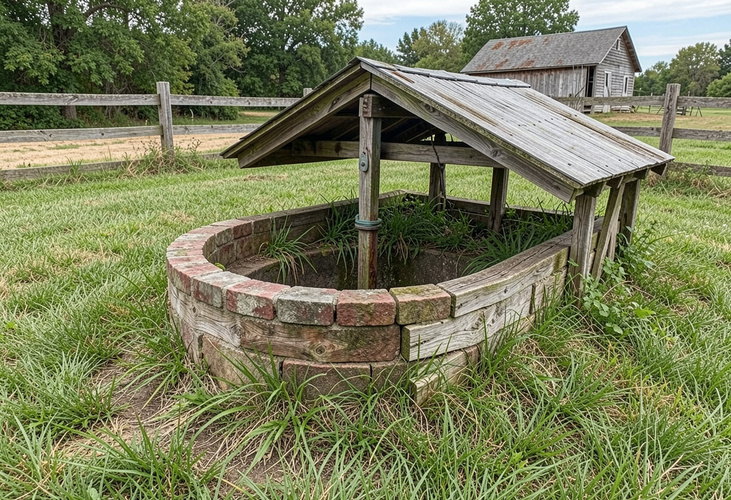
Old wells are easy to forget about. Sometimes they are hidden under grass, inside an old pump house, near a barn, or even under a cover that has not been lifted in years. But an unused well is not something to ignore.
If a well is no longer being used, it needs to be handled the right way. In Minnesota, this is called well sealing, and it is not a do-it-yourself job. The Minnesota Department of Health says unused wells must either be in use, under a maintenance permit, or properly sealed by a licensed well contractor.
We help homeowners, farms, and property owners understand what needs to be done with old or unused wells so they can protect their water, their property, and their family.
Why Old Wells Can Be a Problem
An old well might look harmless, especially if it has been covered for years. But underground, it can create a direct path for dirty surface water, runoff, chemicals, or bacteria to reach the groundwater.
That matters because groundwater is where many homes and farms get their drinking water. If an unused well is open, damaged, or poorly sealed, it can affect not just your well, but nearby wells too.
Old wells can also be a safety risk. Large-diameter wells, old dug wells, and wells with weak covers can be dangerous for children, pets, livestock, and equipment.
What Does “Closing” a Well Mean?
A lot of people say “closing a well,” but the proper term is sealing a well.
Well sealing means the old well is cleared out and filled with approved sealing material, often called grout. This blocks the well from acting like an open pipe into the groundwater.
It is not the same as dropping rocks, dirt, concrete chunks, or boards into the hole. Those shortcuts do not properly protect the water supply and can cause bigger problems later.
Signs You May Have an Unused Well
Some old wells are easy to spot. Others are hidden or forgotten, especially on older farms and rural properties.
You may have an unused well if you notice:
- An old pipe sticking out of the ground
- A pump or windmill that is no longer used
- A concrete slab or cover in an odd spot
- An old well pit or pump house
- A pipe in a basement floor
- A sunken area in the yard
- A well listed on old property records
If you bought an older property near Melrose, Sauk Centre, Albany, Freeport, or the surrounding area, it is worth checking for old well records or asking a well professional to take a look.
Why You Should Not Seal a Well Yourself
This is one of those jobs where doing it wrong can be worse than not doing it at all.
Minnesota requires unused wells to be sealed by a licensed well contractor. The contractor has the right tools, materials, and knowledge to seal the well safely and correctly. After the well is sealed, the contractor must submit a Well and Boring Sealing Record to the Minnesota Department of Health, and the property owner should keep a copy with their property records.
That paperwork matters. It shows the well was properly sealed and can help avoid issues if you sell the property later.
What Happens During Well Sealing?
Every well is a little different, but the basic process usually includes:
First, the well is inspected. The contractor looks at the well type, size, depth, condition, and location.
Next, anything that should not be in the well is removed when possible. This may include old pumps, pipes, debris, or other materials.
Then the well is sealed from the bottom up with approved sealing material. The goal is to close off the well so water and contamination cannot move through it.
Finally, the required sealing record is completed and filed.
It sounds simple, but the details matter. Different wells need different methods, and that is why experience is important.
When Should an Old Well Be Sealed?
A well should be looked at if it is:
- No longer used
- Contaminated
- Damaged or unsafe
- Improperly sealed in the past
- In the way of new construction
- Found during a property sale or inspection
If you are not sure whether a well should be sealed or can still be used, it is best to have it checked. Sometimes a well can be brought back into service. Other times, sealing is the safest and cleanest option.
Protecting Water Starts on Your Own Property
Clean water is one of those things people do not think about until there is a problem. Properly sealing old wells is one simple way to protect the groundwater we all depend on.
For homeowners, it protects your drinking water. For farms, it protects livestock, crops, and future land use. For property sellers, it helps prevent surprises during a sale.
And for the community, it helps keep our local water supply safe.
Need Help With an Old Well Near Melrose, MN?
If you have an unused or old well on your property, Wheels Water Service can help you figure out the next step. Whether the well needs maintenance, inspection, repair, or proper sealing, we are here to make the process clear and straightforward.
Do not guess. Do not cover it and forget it. Take care of the old well the right way.
Contact Wheels Water Service in Melrose, MN, for help with unused wells, old wells, well maintenance, and well drilling services.