
Yellow well water can be dangerous, but it depends on what causes the color. The yellow tint often comes from minerals like iron or tannins that are not toxic, just unpleasant to drink and use. It can also come from bacteria such as E. coli or from chemicals leaching out of old pipes, and those causes can make you sick. Treat the water as unsafe until you identify the source.
If your water is yellow right now, stop drinking it. Use bottled water for drinking, cooking, and brushing teeth. Adults can usually bathe in it, but keep infants and anyone with open wounds out of the water. Do not boil the water to try to clear the color, because boiling concentrates minerals and does not remove contamination.
Immediate Safety Steps
These are the actions to take today. You can do them without any special tools.
- Stop drinking the water immediately.
- Use bottled water for drinking, cooking, and brushing teeth.
- Bathing: Adults can bathe as normal because skin contact with iron or tannins is not harmful. Infants and people with open wounds should avoid bathing in yellow water because their skin or mouths may take in contaminants.
- Pets: Give them bottled water too. Animals can get sick from bacteria just like people.
- Do not boil the water to “fix” the yellow color. Boiling concentrates minerals and does not remove them.
How to Identify the Cause at Home
Before you can judge the risk, you need to narrow down the source. A clear glass and your senses are enough for a first check.
- Check the smell. A rotten egg odor points to hydrogen sulfide or sulfur bacteria.
- Check the feel. A slimy texture suggests iron bacteria growing in the system.
- Check the timing. If the color appears after heavy rain, it likely comes from surface runoff entering the well.
- Check the location. If only one tap runs yellow, the problem is probably rust in that section of pipe.
- Check the settling. Fill a glass and let it sit. Sediment that falls to the bottom shows loose particles from pipes or well walls.
These are do-it-yourself checks. They do not prove the water is safe, but they point you toward the right next step.
When Yellow Water Is Dangerous vs. Just Annoying
The cause decides whether you face a health hazard or a nuisance.
Low risk: Tannins, iron, and manganese. Tannins come from natural organic matter like decaying plants. Iron and manganese come from rock. They stain laundry and taste bad. They are generally not toxic.
High risk: Coliform bacteria, E. coli, or parasites. These enter from surface runoff or seepage around the well cap. They cause immediate illness in healthy adults and worse effects in children.
Variable risk: Rust from old pipes. Iron from rust is not harmful on its own. However, old corroding pipes can leach lead or copper into the water. Those metals are dangerous at high levels.
The verdict: If the cause is biological contamination or chemical leaching, the water is dangerous. If the cause is plain mineral content, it is usually safe but unpleasant.
Signs You May Have Drunk Contaminated Water
If you already consumed the water, watch your body for the next day or two.
- Gastrointestinal symptoms: Nausea, vomiting, diarrhea, stomach cramps.
- Flu-like symptoms: Fever and fatigue can follow bacterial infections like Giardia or Cryptosporidium.
- Skin reactions: Rashes or itching after bathing may signal a reaction to bacteria or high iron and sulfur.
- When to seek medical attention: If symptoms persist or appear in vulnerable family members such as infants or elderly, contact a doctor.
These signs are not caused by plain iron or tannins. They mean the water was likely hazardous.
How Long Until the Water Clears?
The timeline depends on why the water turned yellow.
Temporary scenarios: Discoloration from heavy rain or a disturbed well usually clears within a few days to a week as the well flushes itself.
Chronic scenarios: Iron bacteria or tannins will not clear on their own. They require treatment to remove.
Post-treatment timeline: Sediment filters clear the water instantly because they catch particles. Bacteria treatment such as shock chlorination takes 24 to 48 hours to flush out after the process is done.
If the water does not clear within a week after a rain event, assume a chronic issue rather than a passing one.
Why Making the Water Clear Doesn’t Make It Safe
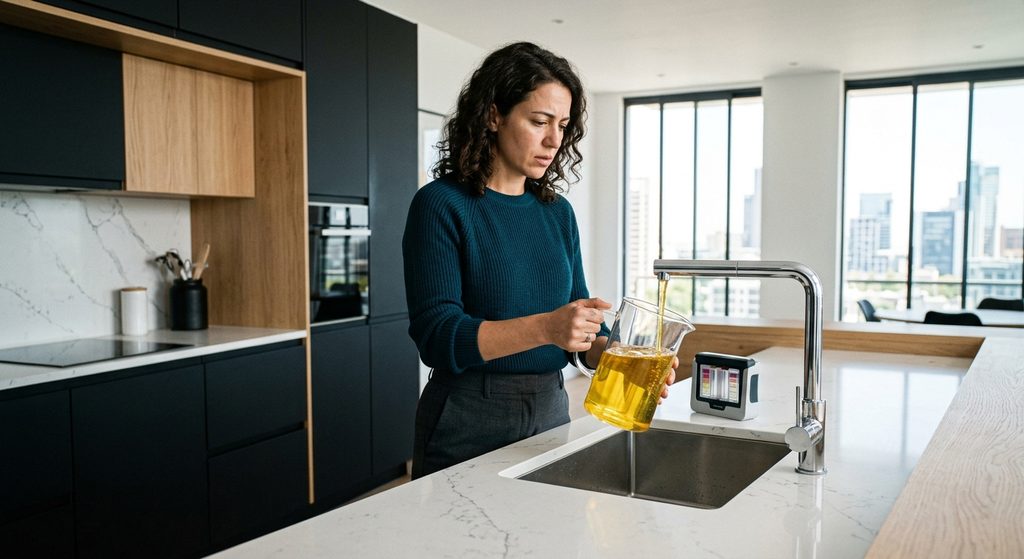
Clear water can still carry hidden danger.
Sediment filters and carbon filters remove color and taste. They do not kill bacteria or viruses.
Water can look clear but still contain pathogens like E. coli or chemicals like nitrates.
Testing is the only reliable check. Visual clarity is not a substitute for a lab test.
When to Call a Professional in Melrose, MN
Some problems are beyond home checks and store-bought filters. Call for help if:
- The water has a rotten egg smell or an oily sheen from iron bacteria.
- Discoloration persists after the rain event has passed.
- Lab tests return positive for bacteria.
Wheels Water Service provides well service and water treatment in Melrose, MN. Schedule a well inspection or water test if you see those signs. If the water clears on its own within a week, keep watching it next time it rains.
FAQ
Can I boil yellow well water to make it safe?
No. Boiling concentrates minerals and does not remove bacteria or chemicals. It can make the color worse. Use bottled water until you test the source.
Is yellow bath water safe for my skin?
For most adults, yes. The minerals that cause yellow tint are not harmful on skin. Avoid it for infants and open wounds because of infection risk from possible bacteria.
Will a water softener fix yellow well water?
A softener removes some minerals like iron and manganese, but it does not kill bacteria. If the yellow comes from tannins or iron bacteria, a softener may reduce color but not solve the underlying issue. You need a proper filter or treatment based on a test.