
Your well water turns cloudy after the first hard fall rain because autumn leaf drop and increased rainfall wash yard chemicals into shallow wells. This first flush carries nitrates from fertilizer, tannins from decaying leaves, and bacteria from organic matter into the aquifer. Summer testing often misses these spikes because the contamination appears only after the seasonal runoff event that follows the dry months.
Stop using the water for drinking, cooking, or making ice until you know the cause. The steps below show how to tell harmless air from dangerous contamination and what to do next.
What to Do Right Now
Take these steps the moment you notice cloudiness after a storm. The goal is to avoid consuming contaminants that the rain washed into the well.
- Stop using the water for drinking, cooking, or making ice. Any consumption risks nitrate exposure.
- Switch to bottled water for all consumption. Bottled water avoids the contaminants washed in by the rain.
- Do not boil the water. Boiling kills some microbes but concentrates nitrates as water evaporates, raising the hazard.
- Keep pets away from drinking the water. Livestock and pets suffer nitrate poisoning just like people.
- Use the water only for flushing toilets if it is running clear. If it is muddy, minimize all use to prevent further well disturbance.
These actions reduce risk while you run the simple tests described later. A quick response protects your household during the uncertain period after the first hard rain.
The Glass Test: Air, Sediment, or Tannins?
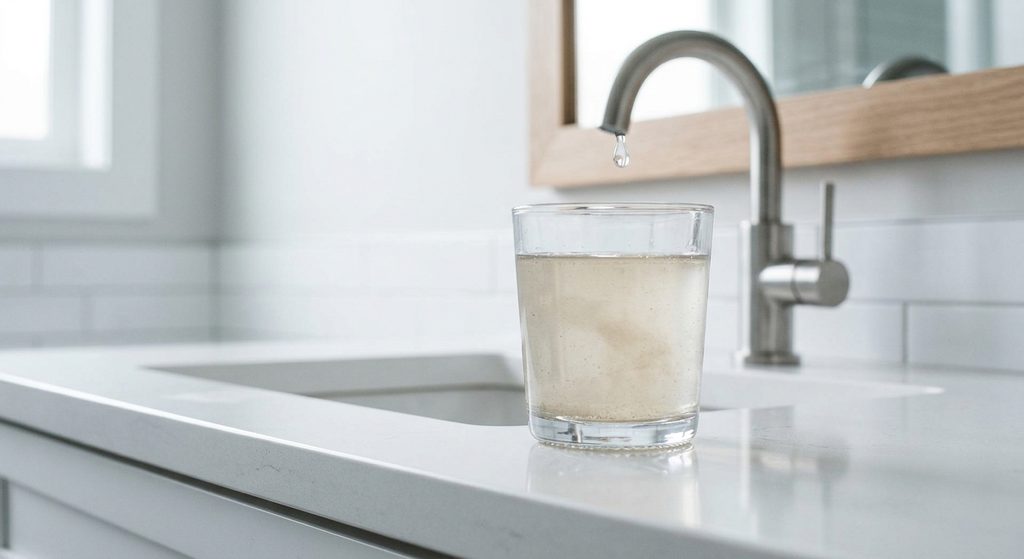
A clear glass reveals what is in your water. This test takes five minutes and no special tools.
- Fill a clear drinking glass with water from the tap. Set it on a counter where it can sit undisturbed.
- Watch the cloudiness. If it clears from the top down, the cause is air bubbles.
- If particles sink to the bottom, you see sediment. Sediment is solid matter from surface soil.
- Check for a yellow or brown tint that stays suspended. That color indicates tannins or iron from leaf decay.
Air bubbles are harmless and come from pressure changes in the line. Sediment or persistent color means surface intrusion. Surface intrusion can carry bacteria and nitrates that summer tests did not catch.
Repeat the test at the outdoor spigot closest to the well for a cleaner reading. Indoor plumbing can add air from aerators, so the outdoor sample is best for diagnosis. Hold the glass to a window to see faint tints.
Why the First Fall Rain Causes Cloudy Water
The timing is not random. Autumn creates a perfect path for contaminants to reach shallow wells. The question “why is my well water cloudy after fall rain” points directly at this seasonal mechanism.
The Dry Summer Effect
Summer sun bakes the soil around the well head. The ground forms a hard crust and small cracks. Rain cannot soak in slowly as it would on loose spring soil. Compacted earth sheds water instead of absorbing it.
The First Flush
The first hard fall rain lands on that crust. Water sheets off instead of penetrating. It becomes runoff that gathers speed and picks up everything on the surface. That slurry flows toward the well casing or into shallow groundwater. The movement is fast because the ground is sealed.
Specific Fall Contaminants
Leaves drop in autumn and collect near the well. Homeowners often apply fertilizer in late summer to help lawns recover. Decaying plant matter builds a layer of organic debris. The rain washes these materials into the aquifer. Nitrate levels spike because fertilizer is soluble. Bacteria counts rise from decaying matter. Tannins from leaves tint the water brown or yellow.
Shallow wells have less soil cover to filter contaminants. The aquifer sits close to the surface, so runoff reaches it fast. Deep wells may show less change, but many rural properties use shallow draws.
Why Fall Differs from Spring
Spring melt happens slowly over weeks. Snow releases water gradually, giving the soil time to filter it. Summer storms may be heavy but yards have less accumulated leaf litter and fertilizer. The first fall rain combines fresh chemical loads with sudden runoff. That is why your water clouds exactly now, not in May or July.
Why Summer Tests Miss the Spike
Most homeowners test wells in early summer for routine care. The sample reflects low-contaminant conditions before leaves drop. Fertilizer applied in late summer sits unused until rain moves it. When the first hard fall rain hits, the hidden load appears. This is the spike that routine testing misses.
Is It the Well or Your Plumbing?
You need to know where the cloudiness starts. The answer changes the fix.
- Locate the outdoor spigot closest to the well. This tap connects before the water softener and house pipes.
- Fill a glass from that spigot and another from the kitchen tap.
- If the outdoor water is clear but the indoor water is cloudy, the issue is the water softener or house pipes.
- If both are cloudy, the contamination enters at the well or pressure tank.
A cloudy reading at the source means the issue is not household plumbing. The problem is upstream of your home. Water softeners can add air or stir sediment, but fall timing points to the well. If the outdoor sample is clear, check the softener for a cracked resin tank or loose fitting.
Inspecting the Well Cap and Casing
Physical gaps let runoff in. A careful walk around the well head can reveal the entry point.
- Visually inspect the well cap for cracks or loose seals. A tight cap keeps surface water out.
- Check the ground around the casing for pooling water or erosion. Low spots direct flow toward the well.
- Look for signs of surface runoff channeling into the well. Downspouts or driveway grade can aim water at the casing.
- A compromised seal is the primary cause of bacterial spikes after rain. Water enters through the gap instead of through the screened intake.
If you see damage, the well needs professional attention. Do not try to seal it with store-bought products. A temporary patch can hide a larger problem and violate code. Grade the soil away from the casing only after the well is verified sealed.
Cost of Repairs and Filtration
Knowing the price range helps you plan. The following figures reflect typical regional charges for well work.
- Professional inspection and bacterial testing: $150–$400. The inspector checks the cap, casing, and pressure tank, then sends a water sample to a lab.
- Casing repair or sleeve installation: $800–$2,500. This work restores the barrier between surface and aquifer.
- Sediment filtration: $200–$800. A spin-down or cartridge filter catches particles after the pressure tank.
- Carbon filtration for tannins: $500–$1,500. Activated carbon absorbs the organic compounds that cause color.
- Shock chlorination: $100–$300. A high-dose chlorine treatment kills bacteria in the well and lines.
These are broad ranges. Your final cost depends on well depth, casing condition, and local labor rates. Inspection includes a visual check and a lab sample for bacteria and nitrates. Casing repair restores the sealed barrier. Filtration sits inside the home and treats specific contaminants. Shock chlorination is the cheapest fix when bacteria alone is the issue.
Legal Requirements for Well Repairs
Rules protect the aquifer and the people who drink from it.
Most jurisdictions require a licensed contractor for casing repairs. A post-repair bacterial test is legally required to clear the work. Local health departments may offer free or low-cost testing for nitrates and bacteria. Do not attempt casing fixes yourself. DIY work risks code violations and can contaminate the water supply.
The rules exist because a broken casing can pollute groundwater for an entire area. Licensed contractors follow code that prevents cross-connection. The required post-repair test protects you from hidden contamination.
In Melrose MN, a licensed well service such as Wheels Water Service can perform the inspection and repair.
Frequently Asked Questions
Can I boil the water to make it safe?
No. Boiling concentrates nitrates as water evaporates. It may kill some bacteria, but the nitrate spike from fall runoff remains or worsens. Cloudy water after fall rain often carries elevated nitrates, so boiling is unsafe.
Is the water safe if the cloudiness goes away after a few minutes?
Yes, if it clears from the top down. That pattern means air bubbles, which are harmless. If a yellow or brown tint remains suspended, the water still contains tannins or iron and needs testing. Sediment that settles also means contamination and is not safe.
Why is the first fall rain worse than spring rain?
Fall rain hits ground that has baked all summer. It washes a season’s worth of leaf litter and yard fertilizer into shallow wells. Spring melt is slow and lacks that concentrated surface load. The timing matches the contaminant surge that summer tests missed.
Watch your water after the next rain. If the glass test shows sediment or color, keep using bottled water and arrange for a licensed well inspection. In Melrose, Wheels Water Service handles well inspections and casing repairs.